
When we document children’s learning, are we truly capturing their story or are we shaping one for them? In today’s early learning environments, educational apps, smartphones, and tablets make it so easy for educators to share (or prove?) children’s learning and experiences with families. But with this convenience comes a deeper question: how do we move beyond documentation as proof of learning, while also protecting their privacy?
Article 16 of the United Nations Convention on the Rights of the Child reminds us that every child has the right to privacy and the right to be heard. But what if a child cannot yet say, “Don’t take my photo”? Do we pause? Do we ask in other ways? Do we pay attention to body language and subtle cues? Respecting privacy in documentation means seeking consent where possible, noticing discomfort, and being intentional about when (and if) we capture an image. Before posting on educational sharing apps we need to reflect carefully on whose interests are being served. We can absolutely celebrate children’s learning without compromising their dignity, but the challenge and responsibility, lies in balancing meaningful documentation with each child’s right to privacy.

Every photo, post, and update contributes to a child’s digital identity, including what we share on educational apps. As educators, we need to pause and ask: does this truly respect the child’s dignity and reflect their voice? The convenience of posting can also lead to oversharing, where rich learning moments risk becoming little more than a flipbook of images. If we are using digital platforms, we need to be intentional and consider not only what we share, but how and why we share it. Most importantly, we must hold in mind how a child might feel about their image being shared. With every post, we carry a responsibility: shaping not just documentation, but a child’s story and sense of self.
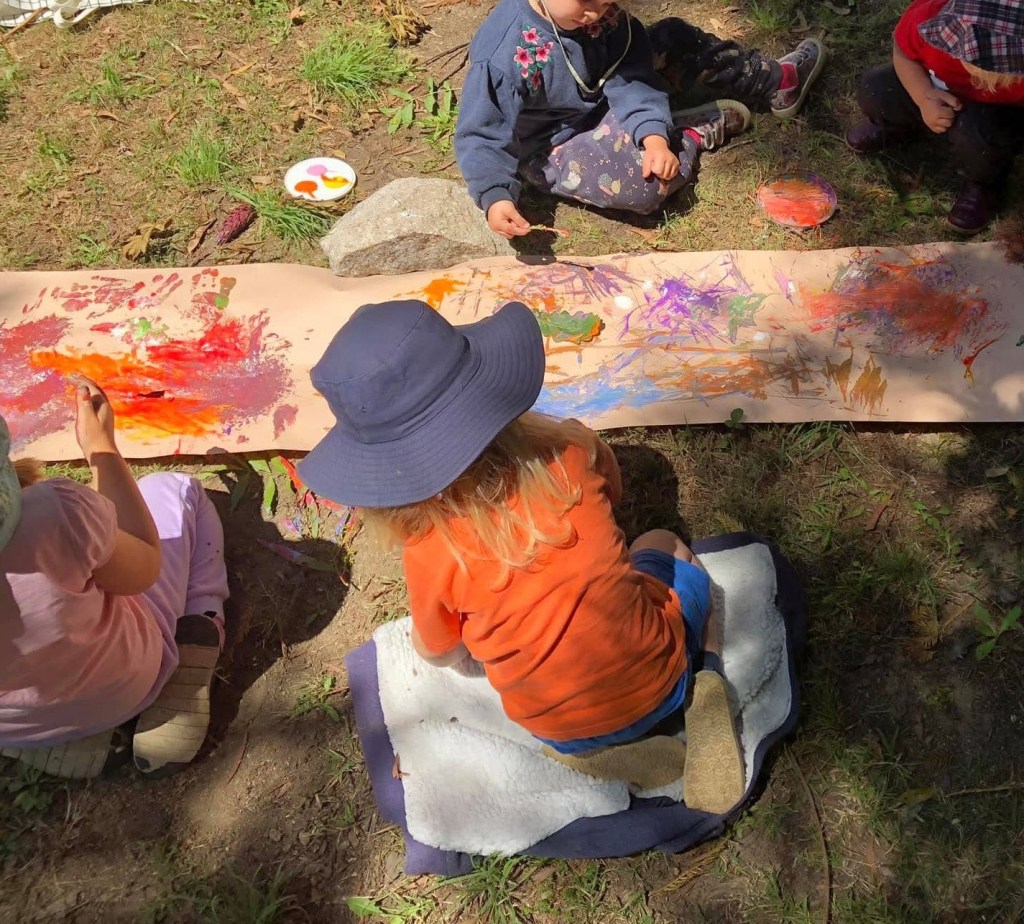
If photos disappeared tomorrow, how else would we tell a child’s story? Beyond the lens, there are many ways to consider this: written observations, transcripts of conversations, children’s sketches and paintings, artefacts of play, and most importantly, the child’s voice. A single anecdote or reflection can often hold more meaning than a dozen photos. When we do use photos, let’s practice gentle photography practices by capturing learning without interrupting play. This might mean focusing on the environment, children’s hands, or the the materials being used, rather than defaulting to faces with posed smiles. We also need to challenge the assumption that every learning moment requires photographic “evidence.” At its heart, documentation is not about compliance… it’s about connection, reflection, and honouring children’s learning in ways that respect their experiences.

We must, without a doubt, avoid photographing children in vulnerable moments such as sleeping or when they are upset. Our focus should always be on moments of learning, curiosity, and joy. By establishing clear team agreements about what kinds of photos and documentation practices are respectful we help to build consistency, ensuring that all educators’ beliefs and philosophies are aligned and that children’s dignity is upheld. Ask yourself: Are my documentation choices protecting children’s rights? Am I capturing their voices? Are my photographs about the learning? Embedding these reflective habits keeps children’s wellbeing and dignity at the heart of our practice.
When educators honour children’s rights, children learn to respect their own boundaries and the boundaries of others. Respecting privacy also extends to families, who are informed and involved in decisions, and to educators, who are equipped with the skills to uphold safe practices across both physical and digital environments. By protecting children’s dignity we create spaces that are not only safe but empowering. A place where children know their voices matter and that their wellbeing comes first.

 The Humble Educator
Leave a comment